
We Interrupt: A Podcast

Are Interruptions ALWAYS Disruptive?
Is the negative perception of interruptions really true? Could interruptions sometimes be the catalyst for connection, creativity, and necessary changes?
In this podcast, we talk about interruptions with people who study them and live them. We seek to better understand how neurobiology, cognition, language, culture, and organizational structures shape our perceptions and feelings when we experience a minor or major break in the action of our daily lives.
“We Interrupt: A Podcast” is for anyone who enjoys stimulating conversations, challenging the status quo, and being open to new ideas that upend commonly held beliefs.
Podcast FAQs
-
I am curious. Simply curious. I have deep-seated questions about “interruption” as a concept and social construct – what is it, how might it be useful, how can we help to start evocative conversations about it across a diverse set of perspectives.
I’m curious if interruptions are a means for breaking into power structures and building inclusive frameworks for our communities. I’m here to explore ideas and how those ideas shape our lives and our experiences. I am not making any money on this and am not marketing anything. I just want to stimulate conversation and share sparkling threads.
-
Right now, it’s really simply to have conversations, share stories, challenge assumptions, and dig into what interruption is and can be in a fun and accessible way.
This all started as an idea for writing a book, and that idea remains. One of the outcomes of the podcast could be a book that collects stories from the podcast and provides context from the research community. I plan to engage with interruption across a range of topics: listening, music, careers, public health, education, neuroscience, violence… to see if a theme crystallizes. I welcome your ideas on what else we should explore!
-
It’s been word of mouth, but I am hoping that our guests and listeners will introduce us to other folks who have more ideas and perspectives.
I welcome contributors from any country or educational background who do research or have lived experience in how interruptions shape our lives. Due to my own linguistic and geographic limitations, I do the interview in English using remote computer-based platforms like Zoom.
-
This podcast series is all about stories – weaving stories together. My guests are co-creators of the content and I want this to feel like – and be! – a safe and fun process of exploration.
-
Podcast content is available under a CC-BY-NC-SA 4.0 license. Which means reusers to distribute, remix, adapt, and build upon the material in any medium or format for noncommercial purposes only if attribution is given to the creator. If you remix, adapt, or build upon the material, you must license the modified material under the same or a compatible license.
I am not looking to plug products on behalf of contributors - the podcast isn’t a marketing opportunity. It is about stories and ideas. We include links to content referenced in the conversation in the episode notes and on our website, and we welcome links from participants to orient listeners to additional relevant content there.
Episode 13: The Past, Present, and Future Craft of Work
Meetings are a microcosm of organizational culture where all social dynamics are in play. Join us as we talk to Tabea Soriano, Partner at The Ready, for an exploration of organization design. We talk about the past, present and future of work, and how process, practice, and principles are the core of creating the meaning of work. How, by making the implicit explicit – like who talks when, how agendas are assembled, and what meetings are actually about – we can experiment with small changes and create trusting workspaces where people can participate, contribute, and make more time for the craft of their work, ultimately reshaping how organizations work.

Episode 12: Cognitive Capacity, Multitasking, and Wisdom
Oh, you are in for a treat! In this episode I go back to my neuroscience roots with Earl K. Miller, professor at the Massachusetts Institute of Technology. Earl studies the neural basis of executive brain functions, the ability to carry out goal-directed behavior using complex mental processes. We talk about learning, memory, and cognitive capacity. How wisdom is our brain encoding our experiences into principles, categories, and concepts using data compression. How sleep and anesthesia are similar and so very different, both invoking full-brain oscillations but one producing memories and the other amnesia. We dig into executive function, multitasking, switching costs, and sensory overload, and how these are manifested in autism, attention deficit disorder, and depression. What is interruption in this milieu? Listen in to find out!
Episode 11: Creating Conversation Spaces that Foster Curiosity and Participation
Welcome to We Interrupt, a podcast that explores the ins and outs of interruptions. In this episode, we talk with professor and clinical psychologist Michael Karson (michaelkarson.com) about personality and societal rules for what is deemed “acceptable” behavior – and how these are normalized, tested, and evolved over time. We discuss the use of performance as a means of exploring – and challenging- roles and rules, as well as the use of interruption in therapy and teaching contexts, as a means to create safe spaces that engender trust and caring.
Episode 10: On Transforming Conflict through Story
In this episode, we explore interruption in the context of conflict transformation with Lorraine Segal, founder of Conflict Remedy (https://conflictremedy.com). Disagreement is a natural part of human relationship, but as we discuss, you don’t have to stay stuck in conflict! We explore interpersonal conflict, what we bring to our workplaces and what our workplaces bring to us, and we tell stories, share mishaps, and dream about what can be if each of us could learn and implement conflict transformation in our own lives.

Episode 9: On Creating Inclusive Pathways to Innovation
In this episode, we explore innovation and interruption in the research community with Jason Barkeloo, founder of the open science platform Therapoid. We talk about building a parallel pathway for innovation, one that provides open technologies, lab equipment, and microgrants and builds reputation through blockchain technologies, with the goal of providing more researchers access to scientific resources. We get a bit nerdy and dig into persistent identifiers, cryptocurrency, open regulation, mitigating exploitation. And I push back about the practicalities of adopting Web 3 when Web 2 is still incompletely integrated into scholarly workflows. Join us for a delightful conversation about opening up science!

Episode 8: When Everything Changes
In this episode, we explore interruption with Andrea Michalek. A serial entrepreneur, Andrea started her career as a software engineer working on innovative search algorithms. Early on, she was tapped to lead a spin-out, and she was hooked. Andrea has led spin-outs, start-ups, and a major acquisition (twice), all in the space of search technology, research literature, and more recently in scholarly reputational management. All that stopped abruptly in 2020, when Andrea suffered a traumatic brain injury from which she emerged over the course of three years. Join us as we talk about her career of interruptions and diversions, and her experience re-starting her own life.
Episode 7: Neurodiverse Workplaces
In this episode, we talk with Emily Russo about talent management, and how interruptions in workplace culture are facilitating an increasingly neurodiverse workforce. Join us as we dig into job crafting, the pros and cons of self-disclosure, and the critical importance of workplace conversations, managing strengths, and training in neurodiversity for managers and team members. Emily does research in the areas of talent management, neurodiverse talent, organizational gender diversity and talent in multinational corporations. She brings to this work a wealth of academic and practical experience: a Masters in International Management from Columbia University and a Ph.D. in International Business Strategy from University of Queensland Business School, as well as service as a Director at CEO Forum Group, and work at KPMG Consulting in both Australia and in the USA. She also serves on the Board of Autism Spectrum Australia (Aspect).
Episode 6: Hanne De Jaegher and the Experience of Interacting
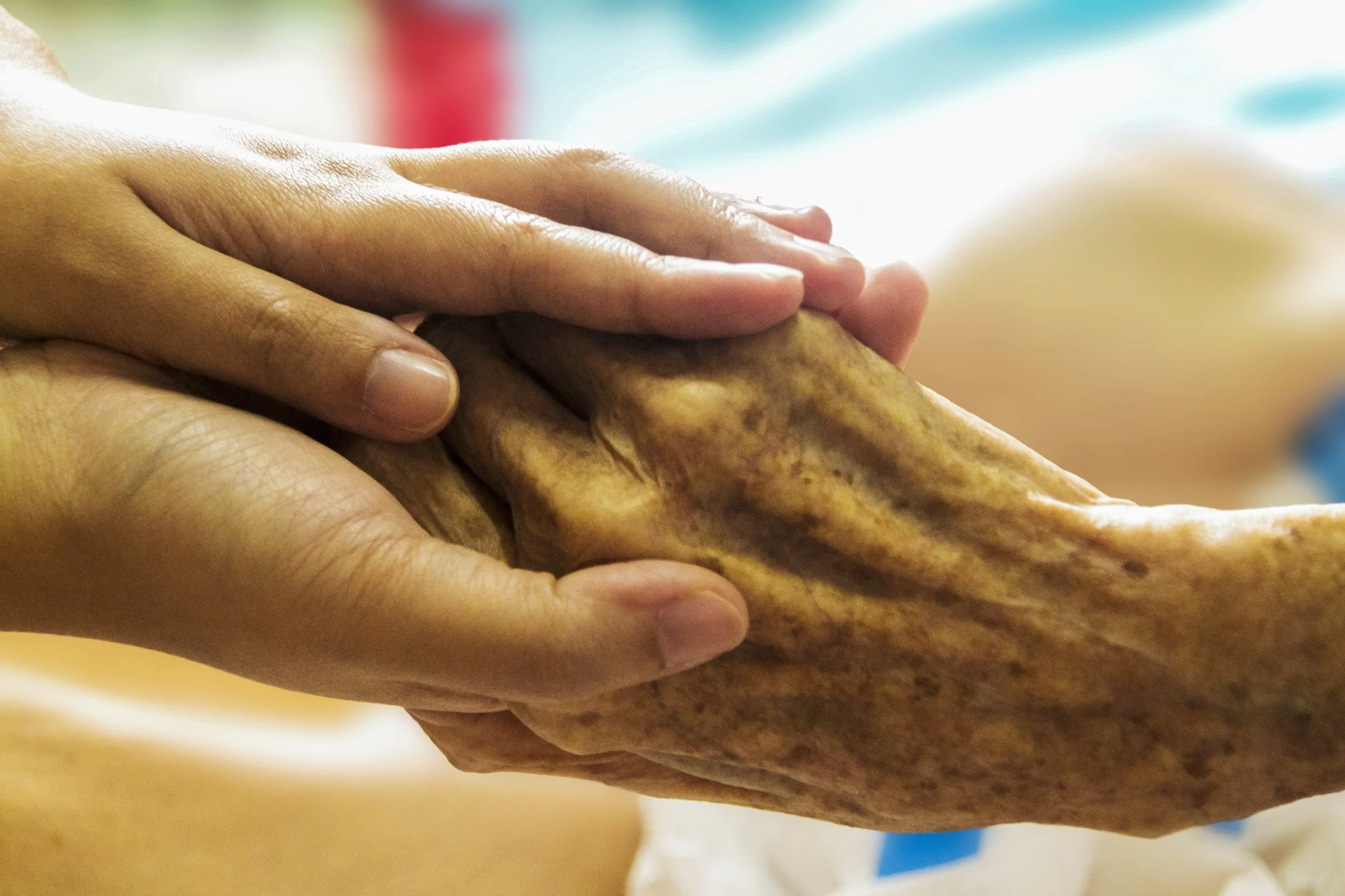
In this conversation with cognitive scientist and philosopher Hanne De Jaegher, we explore interruption in the context of participatory sense making – how we understand the world and ourselves is affected by inter-individual coordination. Participatory sense-making relies on the capacity to flexibly engage with your social partner from moment to moment, It involves emotion, knowledge, mood, physiology, background, concepts, language, norms, and, crucially, the dynamics of the interaction process modulates the sense-making that takes place. How we navigate and participate in these “spaces between” may be our most sophisticated form of knowing: love, a never-ending balancing act. We touch on implications for scientific objectivity, neurodiversity, and dementia. And how this sense-making framework is interrupting cognitive theory, moving us from thinking about self-in-isolation to self-in-connection. From individualism to love, really. In this framework, interpersonal communication and connection can be seen as a series of interruptions, as we perceive, engage, learn, adjust, and through experience develop our sense of self-in-relation.
Episode 5: Learning in Relation
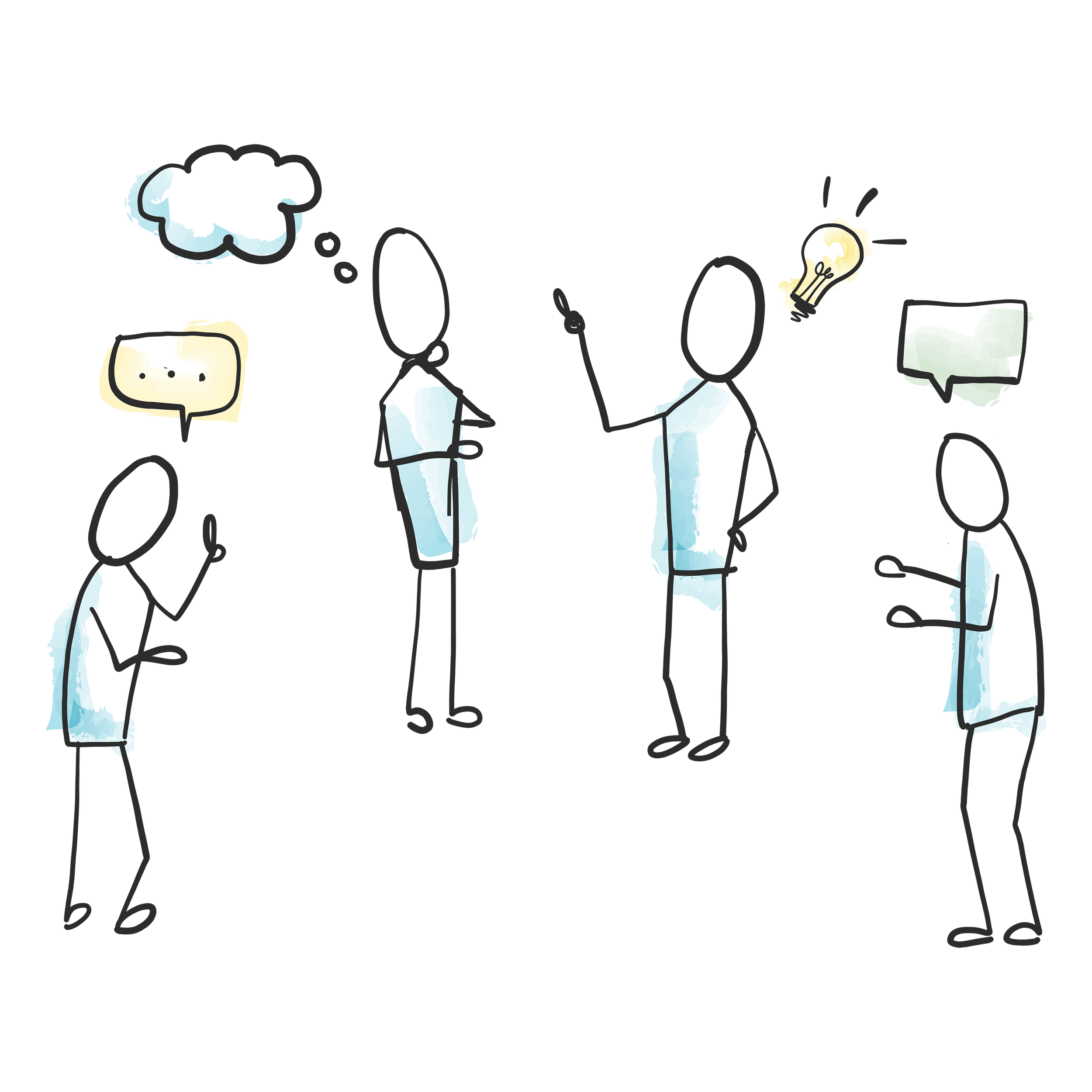
Teaching – and learning – how to be in dialogue is both fun and complex. Join us as we talk with Diane Finegood, Fellow at the Morris J Wosk Center for Dialogue, about building scaffolding for effective conversation, fostering an ethic of care, and interrupting the “sage on the stage” mode of teaching.

Episode 4: Interruption and Continuity in Musical Conversations
We generally think of interruptions in the context of human conversation. One voice, speaking words, interacting with another. Music is another form of conversation, with instruments (including voices) interacting and purposefully building upon one another, melodies to harmony to counterpoint and fugue. In this podcast, we talk with piano teacher and professional accompanist Doris Mattingly about her perspectives on interruption. We journey through the interruption of the COVID pandemic on teaching and how she has adjusted her listening in “virtual studio” lessons. We explore what interruption means during a lesson, and also listen to music – Tchaikovsky, Dvořák, Beethoven, Bartók, Bach – to understand how musical interruptions may be the same and different as those in spoken conversation. Join us for an audio feast!

Episode 3. Mandar Apte on Transforming Reaction to Response
Can interruptions be a positive force in transforming violence to peace? We can use specific breathing patterns to pause, bring our mind and bodies into the present moment, and “turn question marks into exclamation points”.
Join our conversation with Mandar Apte, a petroleum engineer whose career and purpose evolved into social innovation. We talk about how daily inner recalibration through breathing techniques can connect our emotions, feelings and actions and help us manage conflict by peaceful means.

Episode 2. Technologies of Consciousness
We were curious about consciousness and interruption. How we can view interruption as a destructive distraction in some settings, but we can also benefit from interruptions when we are in intentionally crafted creative spaces. When we are paying attention, conscious of the thriving of the people we are with, interruption can be a positive motive force. Join us as we talk with Marti Spiegelman and explore disjointed career paths, coming to wisdom about consciousness, connection and fluidity, energy and purpose. When applying principles of awareness and negotiability we can achieve nothing less than an interruption in our worldview, in which we embrace change as a reconnection with the world around us and appreciate the constancy of human and ecological relationships.
Episode 1: Activation Energy
In this episode we explore interruption and how it shapes our lives and our experiences with The Catalyst Network. Founded by Josie Gibson in 2014, The Catalyst Network is a membership community of accomplished individuals who apply breakthrough thinking to complex business and community issues. In October 2022, Josie invited us to explore the concept of “Interruptions” with the group, and here we share that conversation. Enjoy!